Turn Surprise into a Request for Detail
A low appraisal can produce an immediate sense that something has gone wrong. The figure may be far below a purchase receipt, an insurance schedule, or a family expectation repeated for years. Before rejecting it or accepting it, pause and ask what kind of value is being discussed. Replacement value, fair market value, auction expectation, and a direct purchase offer are not interchangeable.
The aim of questioning is not to pressure an evaluator into a preferred number. It is to make the route from observation to conclusion visible enough that the owner can assess it.
Ask How the Diamond Was Identified
Begin with the stone itself. Was it weighed loose or estimated while mounted? Was an existing laboratory report matched by measurements, characteristics, or inscription? What color, clarity, cut, shape, and condition did the evaluator observe? If the grading differs from an older document, ask which feature produced the difference and whether the setting limited the examination.
Useful questions for a transparent diamond appraisal connect these technical observations to the broader factors behind a real resale figure. A professional explanation should distinguish what was measured, what was visually graded, and what remains uncertain rather than presenting every conclusion with the same level of confidence.
Clarify the Market Basis
Next, ask what market the figure represents. A buyer making an immediate offer must account for resale conditions and business risk. An independent valuation prepared for insurance may use a retail replacement context. An auction estimate may assume a future competitive sale and may not reflect fees or the certainty of a completed transaction. The number can only be judged after its purpose is named.
It is also reasonable to ask how current demand, shape, size, fluorescence, finish, documentation, and condition were considered. The evaluator need not reveal private commercial formulas, but should be able to explain the major influences without hiding behind “the market” as a complete answer.
Separate the Diamond from the Setting
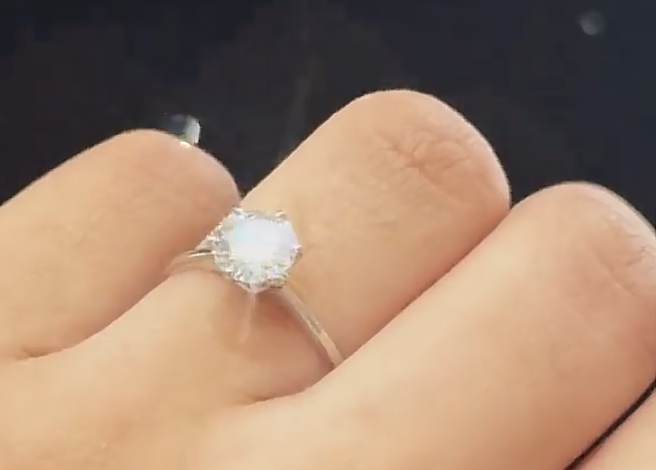
If the appraisal covers a ring or other jewel, ask whether the center stone, side stones, metal, and design were valued separately. An owner may be comparing the complete retail price of a finished ring with an offer focused mainly on the center diamond and recoverable metal. A signed piece may receive a different treatment if it can be authenticated and resold intact.
Repairs and alterations belong in this conversation as well. Resizing, worn prongs, replaced stones, engraving, or a damaged mount can affect the value of the complete object even when the diamond remains sound. A line-by-line explanation often reveals that the disagreement is about the setting rather than the stone.
Ask whether the evaluator considered the ring as a wearable object or assumed that it would be dismantled. That choice can change the treatment of side stones, craftsmanship, and brand identity. It can also explain why another buyer, serving a different audience, reaches a different figure without either party necessarily misidentifying the center diamond. Defining the likely resale route turns a mysterious deduction into a market judgment that can be discussed.
Know When a Second Opinion Is Useful
A second evaluation is sensible when the first explanation is incomplete, when the item is difficult to identify while mounted, or when two documents appear to conflict. Take the same paperwork to each appointment and ask for the scope in writing. Comparisons become meaningful only when both evaluators are answering the same question.
The most reassuring appraisal is not necessarily the highest. It is the one whose purpose, observations, limitations, and terms can be repeated accurately after the meeting. A surprising figure deserves scrutiny, but scrutiny works best as informed curiosity. When the owner can trace the reasoning, the decision to accept, decline, or seek another view becomes calmer and far less vulnerable to either fear or flattery.