Slow smoking rewards control and patience more than headline power, and SUNJOY’s outdoor cooking collection includes kamado-style grills and coordinated station components that can support that process. The best outdoor grills for this purpose are those that hold a stable low temperature, manage fuel efficiently, and fit the volume of food normally prepared.
No single fuel system suits every cook. Charcoal can supply traditional smoke character and long heat, but it requires airflow adjustment and ash management. A well-planned outdoor cooking station should make those tasks easy while protecting preparation surfaces, raw food, clean utensils, and guests from crossing paths.
The grill is only the heat source. Thermometers, fuel storage, weather shelter, work height, lighting, and resting space influence the result during a cook that may last much of a day. A disciplined layout limits unnecessary lid opening and enables the cook to respond to temperature changes without rushing.
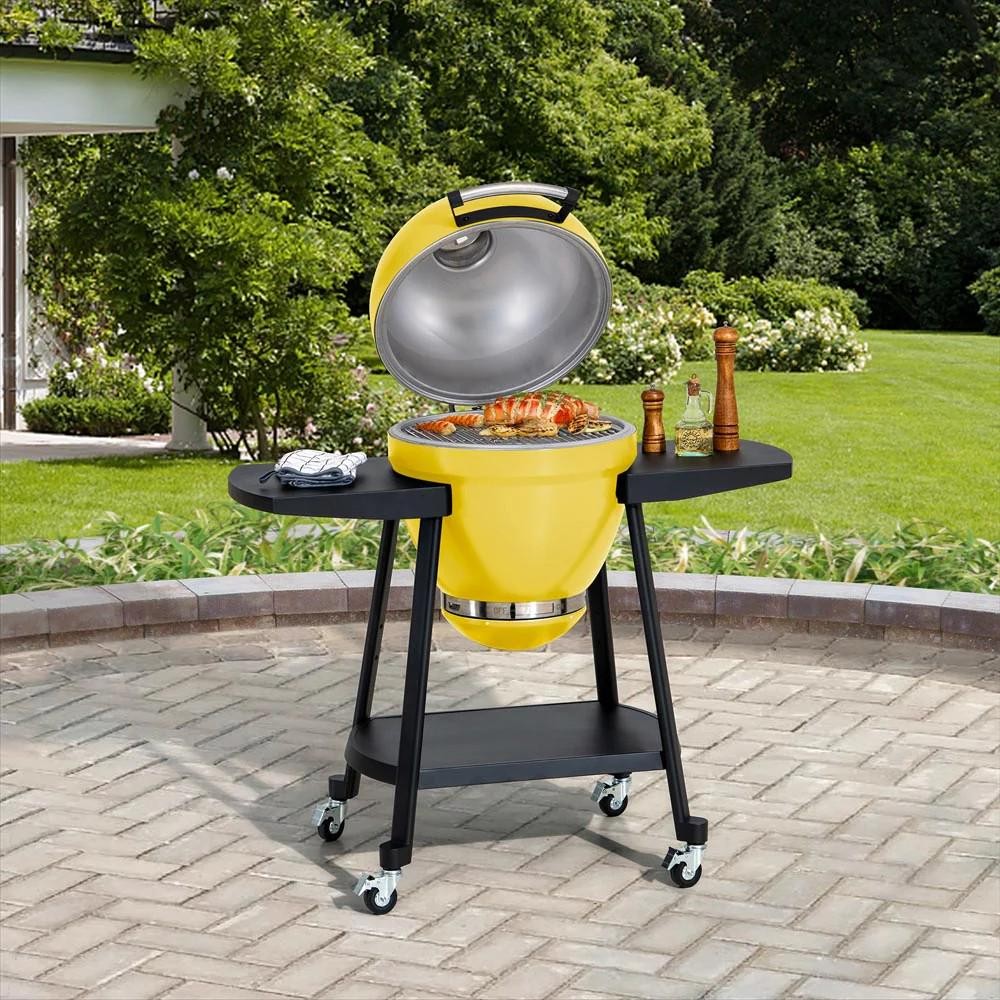
Judge a Smoker by Control, Capacity, and Fuel Routine
SUNJOY’s kamado-style grill uses a double-walled steel body and adjustable top and bottom dampers to support controlled low-temperature cooking. The cook still needs to learn how small vent changes affect temperature. A responsive system is valuable only when controls are accessible and repeatable throughout the session.
Cooking area should match typical use. A large grate can handle several cuts, yet a larger fire may consume more fuel and take longer to stabilize. The best outdoor grills are not necessarily oversized; they supply enough room for the household’s usual meals without creating unnecessary management.
Fuel access matters during long cooks. Charcoal should stay dry, and additions should be possible without disturbing food excessively. Ash removal, firebox cleaning, gasket condition, and thermometer accuracy all affect consistency. A grill that is difficult to maintain may produce irregular results regardless of its initial insulation.
Versatility may enhance value. A kamado may also roast, bake, or grill at higher temperatures, allowing one appliance to serve several methods. That flexibility should be weighed against the grill’s weight, the time required to learn vent control, and the need to handle the included cordierite pizza stone carefully.
Meat resting space is easy to overlook. Large cuts may need insulated holding or a clean covered tray after leaving the smoker. That area should be close enough to lower carrying but separated from raw preparation. The outdoor cooking station should support the meal after cooking as carefully as before it.
Build a Station that Supports an Unhurried Cook
The work sequence starts with fuel and raw ingredients, moves through preparation and cooking, then ends at a clean resting and serving surface. Counters should be arranged in that order. Crossing raw meat over finished food or carrying hot pans through guest seating creates avoidable risk during a long session.
A weather-resistant preparation surface helps the cook remain outside without balancing trays on the grill. Hooks can hold tongs and gloves, while enclosed cabinets protect clean supplies. The outdoor cooking station should keep combustible packaging and towels away from the fire, chimney, and hot ceramic body.
Smoke direction calls for attention. The grill should not send exhaust toward doors, windows, neighbors, or the main seating area. A shelter can protect the cook from sun and light rain, but clearance and ventilation must follow the grill and shelter instructions. Severe weather remains a reason to stop.
Temperature monitoring should lower unnecessary lid opening. Reliable grate and food probes help the cook observe progress without releasing heat repeatedly. Electrical leads need protection from hot surfaces and water. Lighting should illuminate controls and food while avoiding glare that makes thermometer displays difficult to read.
Weather records can help determine whether a permanent shelter is worthwhile. Frequent sun and light rain may justify roof coverage, while strong seasonal winds demand deliberate anchoring and shutdown rules. The grill should never be operated in an enclosed shelter merely to extend the calendar.
Consider SUNJOY Grills and Modular Cooking Components
SUNJOY’s official range includes kamado-style grills, charcoal grills, grill shelters, cabinets, sinks, preparation surfaces, and modular outdoor kitchen pieces. The collection emphasizes weather-resistant construction and organized workflow. Product dimensions should be compared with the patio and the required clearances before an outdoor cooking station is assembled.
A SUNJOY kamado-style grill may suit a cook who values charcoal management, stable heat, and the ability to smoke, roast, bake, or grill. It should not be labeled among the best outdoor grills without considering food volume, preferred fuel, mobility, maintenance, and the user’s willingness to learn vent control.
Modular cabinets and counters can keep tools, seasonings, and clean dishes nearby. A sink module may enhance preparation, but plumbing, winterization, drainage, and local requirements must be resolved. Compact stations may be more suitable for a small deck than a long arrangement that restricts circulation.
Mastering slow smoking comes from repeatable conditions instead of constant equipment upgrades. When a SUNJOY grill and outdoor cooking station fit the site, maintain clear workflow, and support careful temperature control, the cook gains a realistic platform for developing technique over many meals.
A cooking log can record fuel quantity, vent positions, ambient temperature, and timing. Repeated notes reveal how the selected grill behaves and help the cook make smaller adjustments. Technique develops faster when each session builds on evidence instead of memory alone. A search for best outdoor grills should judge SUNJOY against those conditions.

